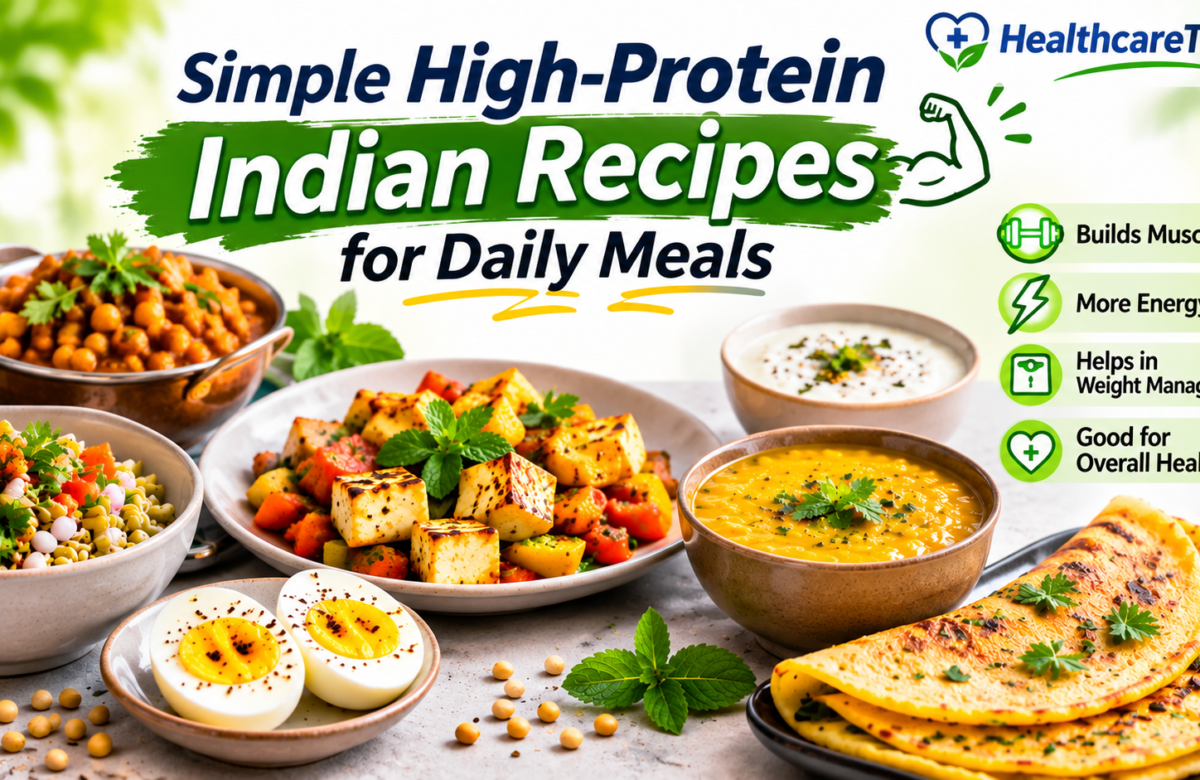
The answer may be closer than you think: in your own kitchen. Indian home cooking is built on dal, curd, paneer, chana, rajma and besan, all of which contain useful amounts of protein. The challenge is not finding exotic high protein recipes. It is making sure these everyday foods appear often enough and in big enough portions across the day.
Here is a simple, meal-by-meal way to do it.
What does a high-protein Indian breakfast look like?
Breakfast is often the lightest meal in an Indian home, which makes it the easiest to improve. Try:
- Moong dal cheela with grated paneer and a side of curd
- Besan cheela loaded with onion, tomato and spinach
- Vegetable upma with a bowl of sprouts on the side
- Paneer paratha with curd, instead of pickle alone
- Idli with a generous bowl of sambar
Soak dal at night, and the morning work drops to a few minutes.
How can you add protein to lunch and dinner?
Lunch and dinner already have a protein dish in most homes, usually dal. Make it thicker and the serving larger. Pair rajma-chawal or chole-roti with a bowl of raita. Add peas or soya chunks to pulao. A simple paneer bhurji, tofu matar or chana masala can sit alongside the sabzi. For those who eat them, eggs, fish and chicken are easy additions.
Cereals and pulses work well together. The ICMR-NIN Dietary Guidelines for Indians recommend combining them, which is why dal-chawal and roti-dal have stood the test of time.
What are some easy high-protein snacks?
The gap between lunch and dinner is where many people reach for biscuits and namkeen. Swap in:
- Roasted chana or a handful of peanuts
- Sprouts or kala chana chaat with lemon and onion
- Paneer tikka or a small paneer sandwich
- A glass of chaas or a bowl of curd with fruit
How do you think about your daily protein requirement?
Many people look up their daily protein requirement and then try to fit it all into dinner. A more practical habit is to spread protein across breakfast, lunch, a snack and dinner. For healthy Indian adults, ICMR-NIN suggests a reference intake of about 0.83 g of protein per kilogram of body weight per day, so roughly 50 g for a 60 kg adult. Active adults, older adults and people with specific health goals may need more, and a dietitian can help you find your number.
On days when cooking is difficult, some adults use a protein product as a top-up. Horlicks Protein Powder, for instance, comes in single-serve sachets that can be mixed into milk or water, or used in recipes such as buttermilk or overnight oats, according to the brand. If you go this route, follow the directions on the pack and keep whole foods at the centre of your meals.
Make it a habit, not a project
Choose one breakfast, one lunch change and one snack this week. Cook extra dal for the next day, keep roasted chana in a jar and set curd every night. Small, repeatable steps will do more than a complicated seven-day plan.
FAQs
Can a vegetarian Indian diet be high in protein?
Yes. Pulses, dairy, soy, nuts and seeds eaten through the day can meet most adults’ needs.
Is home-cooked dal enough protein for one meal?
A thin, small serving may not be. A thicker dal with curd, paneer or chana on the side makes the meal more substantial.
Sources checked: ICMR-NIN Nutrient Requirements for Indians (2020); ICMR-NIN Dietary Guidelines for Indians (2024); Horlicks Protein homepage.
About the Author
Team Horlicks Protein India shares simple, practical ideas for adding more protein to everyday Indian meals and busy adult routines, using familiar foods and clear, label-first advice.
This article is for general information and is not a substitute for personalised advice from a qualified health professional.